Your Die Life Problem May Be a Steel Grade Problem.
Exclusive Daido Steel partnership. Technical specialists. When hot work tooling fails before it should, the grade selection is often the reason. DH31-EX is a Daido
Are your dies holding up to AHSS?
Daido DCMX die steel. Pre-hardened 59-61 HRC. Stocked through IMS. Your dies can hold up to the AHSS you stamp. AHSS sheet is harder on
Need Steel Now? We’ve Got It Ready to Ship
In Stock. Tariff Free. Ships in 24-48 Hours. The Right Grade. Ready to Ship. IMS Steel Drops are in-stock, tariff-free tool steel grades available
Visit IMS at PTXPO 2026 | Booth #1325
International Mold Steel, Inc. is heading to PTXPO 2026 in Rosemont, IL — and we’d love to connect. Visit us at Booth #1325 to talk
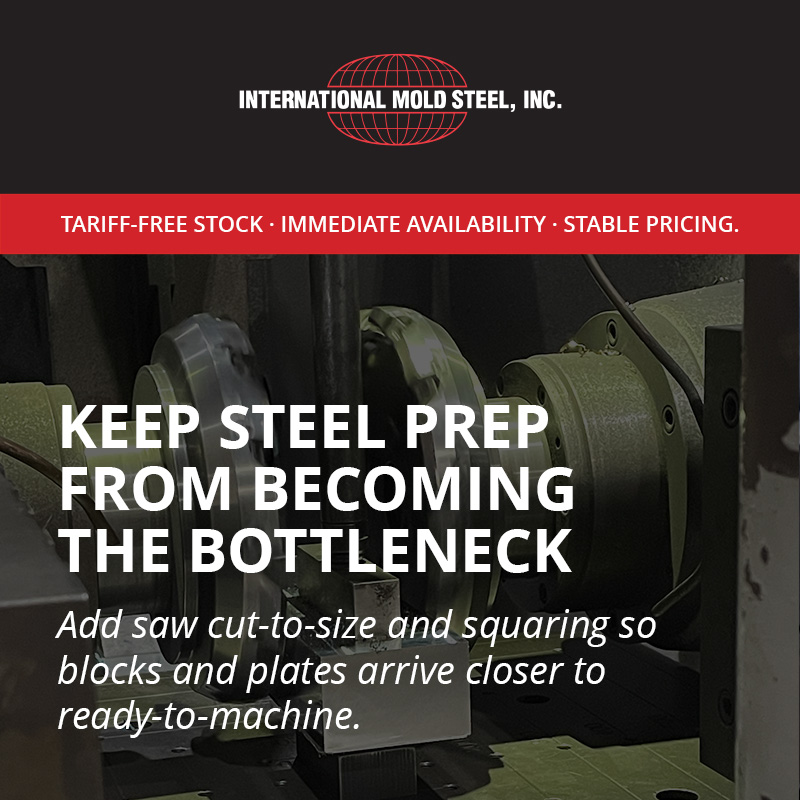
Keep steel prep from becoming the bottleneck
Keep steel prep from becoming the bottleneck Add saw cut-to-size and squaring so blocks and plates arrive closer to ready-to-machine. If internal prep steps
Merry Christmas & Happy New Years from International Mold Steel
The entire IMS team would like to extend our gratitude for your partnership throughout the year. Your success is at the core of what we